
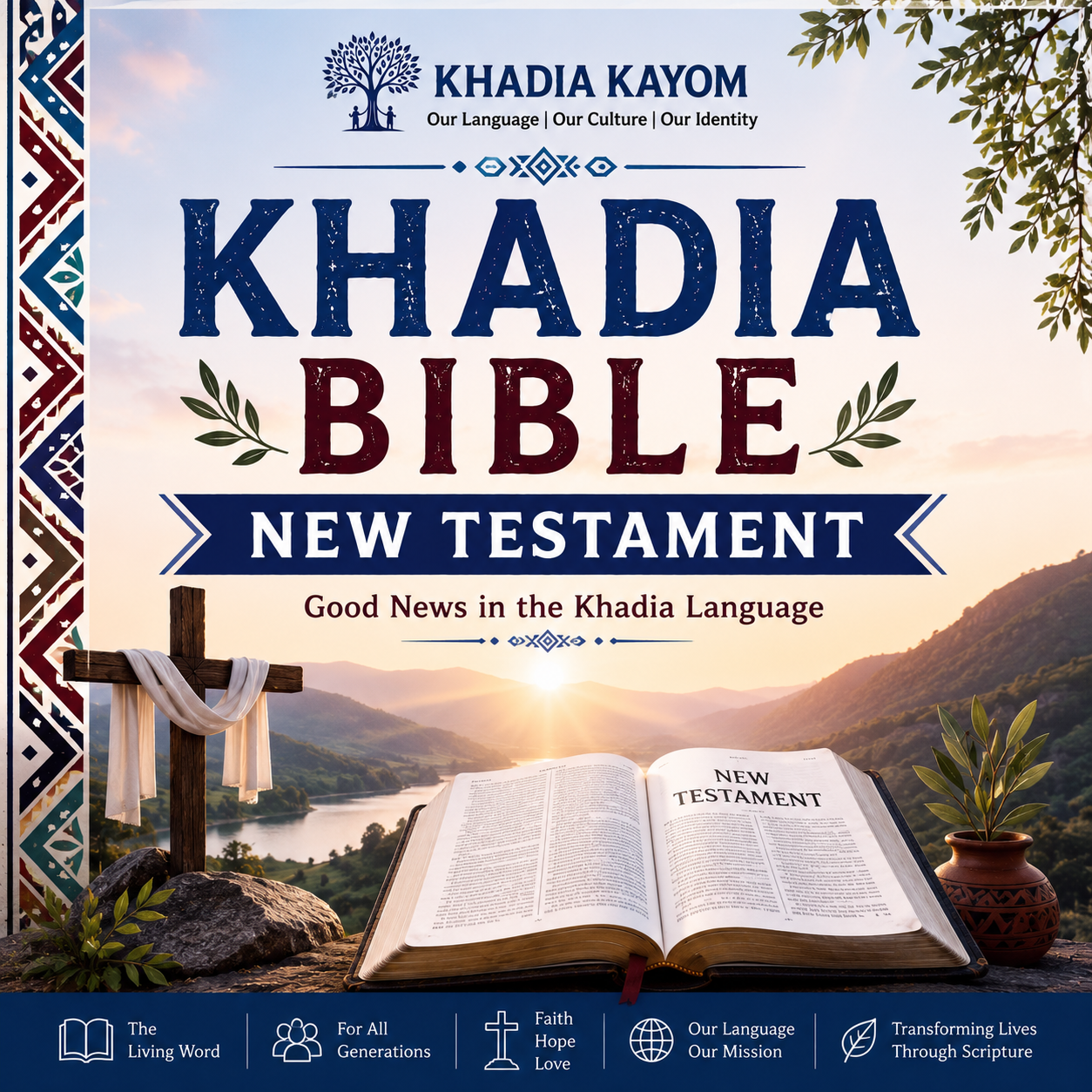
तोनमे कारार – New Testament in Kharia
तोनमे कारार खड़िया भाषा में नवीन नियम (New Testament) को पढ़ने और समझने का एक डिजिटल संसाधन है, जिसे Khadia Kayom के माध्यम से प्रस्तुत किया गया है। खड़िया भाषा का पाठ हिंदी लिपि में उपलब्ध है, जिससे पाठक अपनी भाषा में परमेश्वर के वचन का अध्ययन कर सकें।
नवीन नियम में 27 पुस्तकें हैं, जिनमें प्रभु यीशु मसीह के जीवन, शिक्षाओं, चमत्कारों, मृत्यु और पुनरुत्थान के साथ-साथ प्रारम्भिक कलीसिया के इतिहास, प्रेरितों की पत्रियों और भविष्य की आशा का संदेश मिलता है।
इस पृष्ठ पर आप नवीन नियम की सभी 27 पुस्तकों तक पहुँच सकते हैं। उपलब्ध भाषा विकल्पों के माध्यम से खड़िया, हिंदी और अंग्रेज़ी में सामग्री पढ़ें और अपनी समझ के अनुसार बाइबल अध्ययन करें।
अपनी भाषा में पढ़ें, समझें और विश्वास में बढ़ें।
Khadia Kayom — भाषा, संस्कृति और आध्यात्मिक विरासत के संरक्षण का एक प्रयास।
तोनमे कारार · Tonme Karār
खड़िया भाषा में (Khadia Language)
खड़िया भाषा में (Khadia Language)
In the Khadia Language
तोनमे कारार - नया नियम
तोनमे कारार - नया नियम
Tonme Karār - The New Testament
"तोनमे कारार" खड़िया भाषा में "नया नियम" के लिए एक सार्थक और गहन नामकरण है। आइए इस शब्द के अर्थ को समझें:
"तोनमे कारार" खड़िया भाषा में "नया नियम" के लिए एक सार्थक और गहन नामकरण है। आइए इस शब्द के अर्थ को समझें:
"Tonme Karār" is a meaningful and profound nomenclature for the "New Testament" in the Khadia language. Let us understand the meaning of this term:
तोनमे = नया, ताज़ा, नवीन
तोनमे = नया, ताज़ा, नवीन
Tonme = New, Fresh, Novel
कारार = करार, वाचा, प्रतिज्ञा, समझौता
कारार = करार, वाचा, प्रतिज्ञा, समझौता
Karār = Covenant, Testament, Promise, Agreement
इस प्रकार "तोनमे कारार" का अर्थ है - "नई वाचा" या "नया करार"।
इस प्रकार "तोनमे कारार" का अर्थ है - "नई वाचा" या "नया करार"।
Thus, "Tonme Karār" literally means - "New Covenant" or "New Testament".
तोनमे कारार का महत्व
तोनमे कारार का महत्व
The Significance of Tonme Karār
तोनमे कारार खड़िया समुदाय के लिए केवल एक धार्मिक पुस्तक नहीं है, बल्कि यह परमेश्वर के प्रेम, अनुग्रह और उद्धार के संदेश को अपनी मातृभाषा में समझने का एक दिव्य अवसर है।
तोनमे कारार खड़िया समुदाय के लिए केवल एक धार्मिक पुस्तक नहीं है, बल्कि यह परमेश्वर के प्रेम, अनुग्रह और उद्धार के संदेश को अपनी मातृभाषा में समझने का एक दिव्य अवसर है।
Tonme Karār is not merely a religious book for the Khadia community; it is a divine opportunity to understand God's message of love, grace, and salvation in their mother tongue.
तोनमे कारार में 27 पुस्तकें सम्मिलित हैं, जो प्रभु यीशु मसीह के जीवन, शिक्षाओं, चमत्कारों, क्रूस पर बलिदान, पुनरुत्थान और प्रारम्भिक कलीसिया के विकास का वर्णन करती हैं।
तोनमे कारार में 27 पुस्तकें सम्मिलित हैं, जो प्रभु यीशु मसीह के जीवन, शिक्षाओं, चमत्कारों, क्रूस पर बलिदान, पुनरुत्थान और प्रारम्भिक कलीसिया के विकास का वर्णन करती हैं।
The Tonme Karār contains 27 books that describe the life, teachings, miracles, sacrificial death, resurrection of the Lord Jesus Christ, and the development of the early Church.
तोनमे कारार की संरचना
तोनमे कारार की संरचना
Structure of Tonme Karār
- सुसमाचार - यीशु मसीह के जीवन की चार कथाएँ
- सुसमाचार - यीशु मसीह के जीवन की चार कथाएँ
- The Four Gospels - Four narratives of Jesus Christ's life
- प्रेरितों के काम - प्रारम्भिक कलीसिया का इतिहास
- प्रेरितों के काम - प्रारम्भिक कलीसिया का इतिहास
- Acts of the Apostles - History of the early Church
- पत्रियाँ - विश्वासियों को शिक्षा देने वाले पत्र
- पत्रियाँ - विश्वासियों को शिक्षा देने वाले पत्र
- Epistles - Letters instructing believers
- प्रकाशितवाक्य - भविष्य की आशा का संदेश
- प्रकाशितवाक्य - भविष्य की आशा का संदेश
- Revelation - Message of future hope
तोनमे कारार और खड़िया पहचान
तोनमे कारार और खड़िया पहचान
Tonme Karār and Khadia Identity
जब खड़िया समुदाय "तोनमे कारार" को अपनी भाषा में पढ़ता है, तो परमेश्वर का वचन अधिक स्पष्ट, सरल और हृदयस्पर्शी बन जाता है। यह:
जब खड़िया समुदाय "तोनमे कारार" को अपनी भाषा में पढ़ता है, तो परमेश्वर का वचन अधिक स्पष्ट, सरल और हृदयस्पर्शी बन जाता है। यह:
When the Khadia community reads Tonme Karār in their own language, God's Word becomes clearer, simpler, and more heart-touching. It:
- बच्चों को बाइबल की प्रारम्भिक शिक्षा देता है
- बच्चों को बाइबल की प्रारम्भिक शिक्षा देता है
- Provides basic Bible education to children
- युवाओं को विश्वास में मजबूत बनाता है
- युवाओं को विश्वास में मजबूत बनाता है
- Strengthens youth in faith
- परिवारों में सामूहिक बाइबल अध्ययन को प्रोत्साहित करता है
- परिवारों में सामूहिक बाइबल अध्ययन को प्रोत्साहित करता है
- Encourages family Bible study
- खड़िया भाषा और धार्मिक शब्दावली के संरक्षण में योगदान देता है
- खड़िया भाषा और धार्मिक शब्दावली के संरक्षण में योगदान देता है
- Contributes to preserving the Khadia language and religious vocabulary
- नई पीढ़ी को अपनी मातृभाषा से जोड़ता है
- नई पीढ़ी को अपनी मातृभाषा से जोड़ता है
- Connects the new generation to their mother tongue
धर्मशास्त्रीय महत्व
धर्मशास्त्रीय महत्व
Theological Significance
तोनमे कारार ईसाई विश्वास का आधार है। इसमें प्रेम, क्षमा, विश्वास, अनुग्रह, पवित्रता, सेवा, आशा और अनन्त जीवन जैसे विषयों की गहन शिक्षा दी गई है।
तोनमे कारार ईसाई विश्वास का आधार है। इसमें प्रेम, क्षमा, विश्वास, अनुग्रह, पवित्रता, सेवा, आशा और अनन्त जीवन जैसे विषयों की गहन शिक्षा दी गई है।
The Toनमे Karār stands as the foundation of Christian faith. It teaches about love, forgiveness, faith, grace, holiness, service, hope, and eternal life.
"जब परमेश्वर का वचन अपनी मातृभाषा में पढ़ा और समझा जाता है, तब वह केवल ज्ञान ही नहीं देता, बल्कि विश्वास को दृढ़ करता है, चरित्र को निखारता है और जीवन को परमेश्वर के मार्ग पर चलने की प्रेरणा देता है।"
"जब परमेश्वर का वचन अपनी मातृभाषा में पढ़ा और समझा जाता है, तब वह केवल ज्ञान ही नहीं देता, बल्कि विश्वास को दृढ़ करता है, चरित्र को निखारता है और जीवन को परमेश्वर के मार्ग पर चलने की प्रेरणा देता है।"
"When God's Word is read and understood in one's mother tongue, it not only gives knowledge but also strengthens faith, refines character, and inspires life to walk on God's path."
तोनमे कारार continue to be a spiritual guide, a linguistic treasure, and a cultural heritage for the Khadia community for generations to come.
तोनमे कारार continue to be a spiritual guide, a linguistic treasure, and a cultural heritage for the Khadia community for generations to come.
May तोनमे कारार continue to be a spiritual guide, a linguistic treasure, and a cultural heritage for the Khadia community for generations to come.
🙏 Khadia Kayom - Preserving Faith, Language, and Identity
🙏 Khadia Kayom - Preserving Faith, Language, and Identity
🙏 Khadia Kayom - Preserving Faith, Language, and Identity
Kharia Bible-New Testament
Khadia Bible – New Testament-खड़िया बाइबल – नया नियम | यीशु मसीह का जीवन, उद्धार और सुसमाचार का दिव्य संदेश
परिचय
Khadia Bible – New Testament-खड़िया बाइबल – नया नियम खड़िया (Kharia) भाषा बोलने वाले विश्वासियों, विद्यार्थियों, चर्च सेवकों, शोधकर्ताओं तथा बाइबल अध्ययन करने वाले प्रत्येक व्यक्ति के लिए एक महत्वपूर्ण आध्यात्मिक और शैक्षिक संसाधन है। नया नियम (New Testament) परमेश्वर के प्रेम, अनुग्रह, उद्धार और अनन्त जीवन के संदेश का केंद्र है। इसमें प्रभु यीशु मसीह के जन्म, जीवन, शिक्षा, चमत्कार, क्रूस पर बलिदान, पुनरुत्थान तथा प्रारम्भिक कलीसिया के विकास का विस्तृत वर्णन मिलता है।
Khadia Kayom का उद्देश्य खड़िया भाषा में उपलब्ध आध्यात्मिक एवं शैक्षिक सामग्री को डिजिटल रूप में सुरक्षित रखना और विश्वभर के खड़िया समुदाय तक पहुँचाना है। इसी उद्देश्य से Khadia Bible – New Testament अनुभाग तैयार किया गया है, ताकि प्रत्येक व्यक्ति अपनी मातृभाषा में परमेश्वर के वचन का अध्ययन कर सके और विश्वास में दृढ़ हो सके।
नया नियम क्या है?
नया नियम (New Testament) पवित्र बाइबल का दूसरा भाग है। इसमें 27 पुस्तकें सम्मिलित हैं। यह प्रभु यीशु मसीह के जीवन और उनके द्वारा सम्पूर्ण मानवजाति के लिए दिए गए उद्धार के संदेश को प्रस्तुत करता है। इसके साथ ही इसमें प्रारम्भिक कलीसिया के इतिहास, प्रेरितों की सेवकाई, विश्वासियों के लिए लिखे गए पत्र तथा भविष्य की आशा का भी वर्णन मिलता है।
नया नियम ईसाई विश्वास का आधार है। इसमें प्रेम, क्षमा, विश्वास, अनुग्रह, पवित्रता, सेवा, आशा और अनन्त जीवन जैसे विषयों की गहन शिक्षा दी गई है।
नए नियम की संरचना
नया नियम की 27 पुस्तकों को सामान्यतः निम्न भागों में विभाजित किया जाता है—
1. सुसमाचार (The Four Gospels)
नए नियम की पहली चार पुस्तकें—मत्ती, मरकुस, लूका और यूहन्ना—प्रभु यीशु मसीह के जीवन, सेवकाई, शिक्षाओं, चमत्कारों, मृत्यु और पुनरुत्थान का वर्णन करती हैं।
2. प्रेरितों के काम (Acts of the Apostles)
यह पुस्तक बताती है कि प्रभु यीशु के स्वर्गारोहण के बाद पवित्र आत्मा की सामर्थ्य से प्रारम्भिक कलीसिया कैसे विकसित हुई तथा प्रेरितों ने संसार के विभिन्न भागों में सुसमाचार का प्रचार कैसे किया।
3. प्रेरितों की पत्रियाँ (Epistles)
इन पत्रों में प्रारम्भिक कलीसियाओं और विश्वासियों के लिए विश्वास, चरित्र, प्रेम, सेवा, एकता, प्रार्थना, पवित्र जीवन तथा मसीही जीवन के विभिन्न विषयों पर शिक्षा दी गई है।
4. प्रकाशितवाक्य (Revelation)
नए नियम की अंतिम पुस्तक प्रकाशितवाक्य है। इसमें परमेश्वर की अंतिम विजय, न्याय, नई सृष्टि तथा अनन्त राज्य की आशा का संदेश मिलता है।
खड़िया भाषा में नए नियम का महत्व
जब परमेश्वर का वचन मातृभाषा में पढ़ा जाता है, तब उसका संदेश अधिक स्पष्ट, सरल और हृदयस्पर्शी बन जाता है।
खड़िया भाषा में नया नियम—
बच्चों को बाइबल की प्रारम्भिक शिक्षा देता है।
युवाओं को विश्वास में मजबूत बनाता है।
परिवारों में सामूहिक बाइबल अध्ययन को प्रोत्साहित करता है।
चर्च, संडे स्कूल और बाइबल अध्ययन समूहों के लिए उपयोगी है।
खड़िया भाषा और धार्मिक शब्दावली के संरक्षण में योगदान देता है।
नई पीढ़ी को अपनी मातृभाषा से जोड़ता है।
मातृभाषा में परमेश्वर के वचन को समझना विश्वास को और अधिक गहरा बनाता है।
यीशु मसीह का संदेश
नए नियम का केंद्र प्रभु यीशु मसीह हैं। उनका जीवन सम्पूर्ण मानवजाति के लिए प्रेम, दया, क्षमा और उद्धार का संदेश देता है।
नए नियम हमें सिखाता है कि—
परमेश्वर प्रत्येक व्यक्ति से प्रेम करते हैं।
उद्धार परमेश्वर के अनुग्रह का उपहार है।
विश्वास और आज्ञाकारिता मसीही जीवन का आधार हैं।
क्षमा, नम्रता और सेवा महान गुण हैं।
सभी लोगों से प्रेम करना परमेश्वर की इच्छा है।
आशा और विश्वास कठिन परिस्थितियों में भी शक्ति प्रदान करते हैं।
ये शिक्षाएँ आज भी प्रत्येक परिवार, समाज और विश्वासी के जीवन के लिए अत्यंत प्रासंगिक हैं।
खड़िया समाज और नया नियम
खड़िया समाज में नया नियम केवल आराधना का ग्रंथ नहीं है, बल्कि दैनिक जीवन का मार्गदर्शक भी है। चर्च की आराधना, पारिवारिक प्रार्थना, संडे स्कूल, युवा संगति तथा बाइबल अध्ययन में नए नियम की महत्वपूर्ण भूमिका है।
जब नया नियम खड़िया भाषा में उपलब्ध होता है—
बच्चे अपनी भाषा में यीशु मसीह के जीवन को समझते हैं।
परिवार नियमित बाइबल अध्ययन कर सकते हैं।
चर्च सेवक सरलता से शिक्षा दे सकते हैं।
नई पीढ़ी भाषा और विश्वास दोनों से जुड़ी रहती है।
धार्मिक शिक्षा अधिक प्रभावी बनती है।
Khadia Kayom और Khadia Bible
Khadia Kayom केवल बाइबल पुस्तकों की सूची प्रस्तुत करने का प्रयास नहीं है। इसका उद्देश्य खड़िया भाषा में एक व्यापक डिजिटल बाइबल अध्ययन मंच विकसित करना है।
भविष्य में इस अनुभाग में निम्न सुविधाएँ जोड़ी जा सकती हैं—
नए नियम की सभी 27 पुस्तकों का परिचय।
प्रत्येक पुस्तक का संक्षिप्त सारांश।
प्रमुख पात्रों का परिचय।
धार्मिक शब्दावली (Bible Dictionary)।
बाइबल मानचित्र।
विषयवार अध्ययन।
बच्चों के लिए सरल बाइबल परिचय।
ऑडियो उच्चारण।
प्रश्नोत्तरी (Bible Quiz)।
समयरेखा (Bible Timeline)।
अध्ययन मार्गदर्शिका।
संबंधित शब्दों के लिंक।
इससे Khadia Kayom खड़िया भाषा में बाइबल अध्ययन का एक समग्र ज्ञान-केंद्र बन सकता है।
डिजिटल युग में नया नियम
आज मोबाइल और इंटरनेट के माध्यम से अध्ययन करना अत्यंत सरल हो गया है। यदि खड़िया भाषा में नया नियम और उससे संबंधित अध्ययन सामग्री डिजिटल रूप में उपलब्ध हो, तो भारत ही नहीं, बल्कि विश्वभर में रहने वाले खड़िया समुदाय के लिए यह एक महत्वपूर्ण संसाधन सिद्ध होगा।
भविष्य में निम्न आधुनिक सुविधाएँ जोड़ी जा सकती हैं—
अध्यायवार खोज।
पुस्तकवार खोज।
धार्मिक शब्दकोश।
AI आधारित खोज।
ऑडियो बाइबल।
दैनिक बाइबल अध्ययन योजना।
पसंदीदा अध्यायों को सुरक्षित रखने की सुविधा।
नोट्स और बुकमार्क।
चित्र आधारित अध्ययन।
ऑनलाइन परीक्षा और प्रमाणपत्र।
खड़िया भाषा के संरक्षण में योगदान
खड़िया भाषा में नया नियम उपलब्ध होना केवल धार्मिक आवश्यकता नहीं है, बल्कि भाषाई संरक्षण का भी महत्वपूर्ण माध्यम है।
नए नियम के माध्यम से—
धार्मिक शब्दावली विकसित होती है।
मातृभाषा में पढ़ने की आदत बढ़ती है।
नई पीढ़ी भाषा सीखती है।
अनुवाद कार्य को प्रोत्साहन मिलता है।
भाषा का डिजिटल दस्तावेजीकरण मजबूत होता है।
इस प्रकार नया नियम खड़िया भाषा के संरक्षण और विकास में भी महत्वपूर्ण भूमिका निभाता है।
शिक्षा और अनुसंधान के लिए उपयोगिता
Khadia Bible – New Testament केवल विश्वासियों के लिए ही नहीं, बल्कि—
विद्यार्थियों,
शोधकर्ताओं,
भाषाविदों,
अनुवादकों,
धर्मशास्त्र के छात्रों,
सांस्कृतिक शोधकर्ताओं
के लिए भी एक मूल्यवान अध्ययन सामग्री है। मातृभाषा में उपलब्ध धार्मिक साहित्य भाषा विज्ञान, अनुवाद अध्ययन और सांस्कृतिक अनुसंधान के लिए महत्वपूर्ण स्रोत का कार्य करता है।
निष्कर्ष
खड़िया बाइबल – नया नियम (Khadia Bible – New Testament) प्रभु यीशु मसीह के जीवन, शिक्षाओं, प्रेम, अनुग्रह, उद्धार और अनन्त जीवन के संदेश का दिव्य परिचय है। इसकी 27 पुस्तकें विश्वास, आशा, प्रेम, क्षमा, सेवा और परमेश्वर के राज्य की शिक्षा प्रदान करती हैं।
Khadia Kayom का यह प्रयास केवल खड़िया भाषा में नया नियम प्रस्तुत करने तक सीमित नहीं है, बल्कि खड़िया भाषा, ईसाई विश्वास और सांस्कृतिक विरासत को डिजिटल रूप में संरक्षित करने का एक दीर्घकालिक अभियान है। यह मंच विद्यार्थियों, परिवारों, चर्चों, शिक्षकों, शोधकर्ताओं और भाषा-प्रेमियों के लिए एक विश्वसनीय ज्ञान-केंद्र बनने की दिशा में कार्य कर रहा है।
जब परमेश्वर का वचन अपनी मातृभाषा में पढ़ा और समझा जाता है, तब वह केवल ज्ञान ही नहीं देता, बल्कि विश्वास को दृढ़ करता है, चरित्र को निखारता है और जीवन को परमेश्वर के मार्ग पर चलने की प्रेरणा देता है। यही Khadia Kayom का उद्देश्य है—खड़िया भाषा को संरक्षित करना, परमेश्वर के वचन को सुलभ बनाना तथा आने वाली पीढ़ियों के लिए विश्वास, शिक्षा और संस्कृति की अमूल्य धरोहर सुरक्षित रखना।
Frequently Asked Questions (FAQs) – Khadia Bible-New Testament
1. What is the Khadia Bible – New Testament?
2. How many books are there in the New Testament?
3. What is the main purpose of the New Testament?
4. Why is the New Testament important for Christians?
5. Why should I read the New Testament in the Khadia language?
6. How can Khadia Kayom help me study the New Testament?
7. What is the relationship between the Old Testament and the New Testament?
8. Why is preserving the Khadia Bible important?
9. What is the mission of Khadia Kayom regarding the Khadia Bible?
10. Can students and researchers use the Khadia Bible for educational purposes?
Khadia Bible – New Testament
A Testament of Faith, Language, and Identity
The Khadia Bible – New Testament is far more than a translated religious text; it is a bridge between faith and daily life, between sacred Scripture and the living culture of the Khadia people. It affirms that every community, regardless of size or language, deserves to hear the message of hope and salvation in its own mother tongue.
For the Khadia community, the New Testament is not merely a book to be read—it is a spiritual voice to be cherished, a cultural treasure to be preserved, and a heritage to be passed down from one generation to another. In a world where many indigenous languages are gradually disappearing, the Khadia Bible stands as a powerful reminder that every language carries dignity, identity, and spiritual value.
The Khadia People and Their Language
The Khadia people are an indigenous tribal community primarily living in the eastern and central regions of India, especially in Jharkhand, Odisha, Chhattisgarh, and West Bengal. They possess a rich cultural heritage rooted in community life, traditional customs, music, dance, and a close relationship with nature.
The Khadia language, also known as Kharia, belongs to the Austroasiatic language family under the Munda linguistic group. For generations, it has served as the primary medium through which the Khadia people preserve their traditions, oral history, beliefs, and social identity.
Although many Khadia people today speak Hindi, Odia, or other regional languages, the emotional and spiritual connection of the mother tongue remains unique. It is the language of family, memory, worship, and cultural belonging.
The Importance of Translating the New Testament
The translation of the New Testament from Hindi into Khadia represents an important spiritual and linguistic milestone. It allows the teachings of Jesus Christ, the parables, prayers, miracles, and message of salvation to become more understandable and personally meaningful for Khadia-speaking believers.
Hearing Scripture in one’s own language creates a deeper connection with faith. It transforms biblical teachings from distant words into living truths that speak directly to the heart of the community.
This translation also demonstrates deep respect for the Khadia language and culture. It acknowledges that indigenous languages are equally capable of expressing profound spiritual truths and theological ideas.
Cultural and Linguistic Significance
The Khadia Bible – New Testament plays an important role not only in religious life but also in the preservation of language and cultural identity.
Its contributions include:
- Promoting the use of the Khadia language in churches and worship
- Encouraging younger generations to read and value their mother tongue
- Strengthening written Khadia literature
- Preserving indigenous vocabulary and expressions
- Supporting cultural identity and community pride
In many communities, Bible translations become some of the earliest and most influential written materials in the native language. The Khadia New Testament therefore serves as both a spiritual guide and a linguistic resource.
Faith in the Language of the Heart
One of the most powerful aspects of the Khadia New Testament is its ability to bring faith closer to the people. Prayers, hymns, sermons, and Gospel readings become more personal when heard in the language spoken at home and within the community.
For many believers, reading the words of Jesus in Khadia creates a sense of belonging and emotional connection that cannot be fully experienced through another language.
It reminds the community that God’s message is universal and that every culture and language has a valued place within the Christian faith.
Challenges and Future Possibilities
Despite its importance, the preservation and promotion of the Khadia language continue to face several challenges:
- Declining use of indigenous languages among youth
- Limited publication and educational materials
- Lack of standardized writing systems in some regions
- Growing dominance of regional and global languages
However, digital technology, online Bible platforms, audio Scriptures, and community-led language initiatives are opening new opportunities for the future. Continued translation work, publication efforts, and language education programs can help ensure that the Khadia language and its Christian literature remain vibrant for generations to come.
Conclusion
The Khadia Bible – New Testament is more than a religious translation; it is a remarkable symbol of faith, language preservation, and cultural identity. By bringing the teachings of Jesus Christ into the Khadia language, the New Testament allows the Gospel message to become more accessible, heartfelt, and spiritually meaningful for native speakers.
This translation strengthens both religious life and linguistic heritage. It encourages the use of the mother tongue in worship, preserves indigenous expression, and inspires younger generations to value their cultural roots.
Above all, the Khadia New Testament reflects the deep connection between language, faith, and identity. It stands as a testimony that every language is worthy of carrying the message of hope, love, and salvation.
तोनमे कारार – New Testament in Kharia | Khadia Kayomतोनमे कारार – New Testament in Kharia | Khadia Kayomतोनमे कारार – New Testament in Kharia | Khadia Kayomतोनमे कारार – New Testament in Kharia | Khadia Kayomतोनमे कारार – New Testament in Kharia | Khadia Kayomतोनमे कारार – New Testament in Kharia | Khadia Kayomतोनमे कारार – New Testament in Kharia | Khadia Kayomतोनमे कारार – New Testament in Kharia | Khadia Kayomतोनमे कारार – New Testament in Kharia | Khadia Kayomतोनमे कारार – New Testament in Kharia | Khadia Kayom
 English
  Hindi
Hindi