
Khadia Kayom-Learn Kharia language
Khadia Kayom-Learn Kharia language । khadia script
ऊते अम्पेते झड़ितेगा रेमा:तेले .अनिङ्ग या संस्कृति • अनिङ्ग या पहचान • अनिङ्ग या भविष्य
खड़िया भाषा, संस्कृति ओड़: परंपरा
ऊते सोबतेगा स्वागत आईज़ .सीखे नानिङ्ग • सिखायेंनिङ्ग • संस्कृति परम्परा ते बचायेंनिङ्ग
भाषा, कायोम , सांस्कृतिक विरासत, शिक्षा एवं सामाजिक जागरूकता
खड़िया कायोम - सीखे नानिङ्ग, सिखयनिङ्ग, संस्कृति बाचएनिङ्ग
खड़िया अलोंग -येसु जोई आश्र इनया आमा तेगा
सीखे ना ठंडों
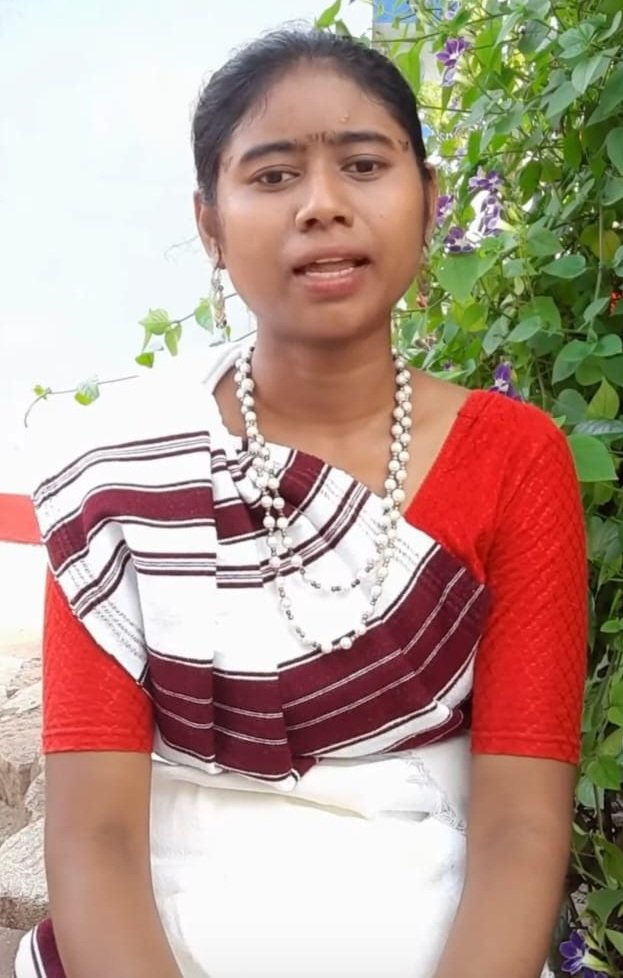
Archana Dungdung
कुवारी अर्चना डुंगडुंग, सोश्ल मीडिया ते खड़िया कायोम /भाषा, संस्कृति याः प्रचार कर्ता हेखे । आडिया सोश्ल मीडिया Anjorem खड़िया कायोम सीखेना थोङ्ग मोञ्ज महत्वपूर्ण भूमिका निभाय ते ।
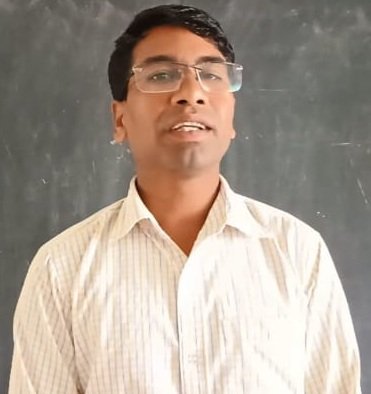
Rajesh Khadia
सोश्ल मीडिया / यूट्यूब ते खड़िया कायोम /भाषा, संस्कृति याः प्रचार कर्ता हेखे । आडिया सोश्ल मीडिया Tube 100 - https:// www. youtube. com/@TUBE-zw9je ते खड़िया कायोम सीखेना थोङ्ग मोञ्ज महत्वपूर्ण मंच चलायते ।
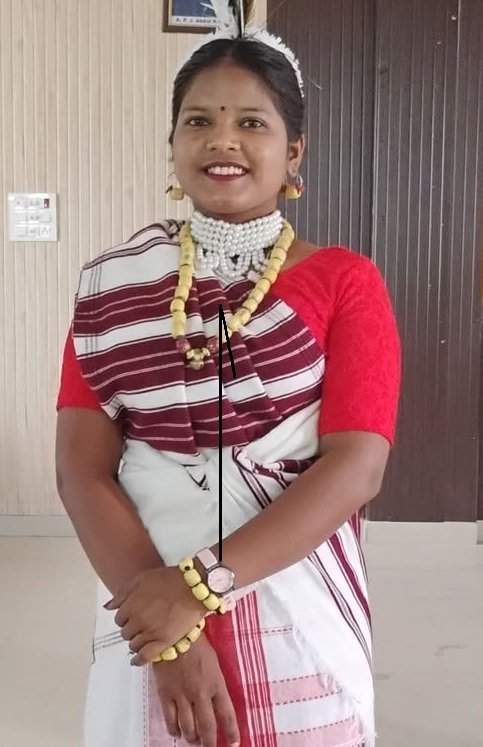
Kiran Kullu
, सोश्ल मीडिया ते खड़िया कायोम /भाषा, संस्कृति याः प्रचार कर्ता, एक प्रयास । आडिया सोश्ल मीडिया Anjorem खड़िया कायोम सीखेना थोङ्ग मोञ्ज महत्वपूर्ण मंच होईताज ।

Dr Miracle Tete
सोश्ल मीडिया / यूट्यूब ते खड़िया कायोम /भाषा, संस्कृति याः प्रचार कर्ता हेखे । आडिया सोश्ल मीडिया https://www.youtube.com/@Miracletete ते खड़िया कायोम सीखेना थोङ्ग मोञ्ज महत्वपूर्ण मंच चलायते ।
अनीङ्ग गा
खड़िया कायोम · Khadia Kayom
खड़िया कायोम (Khadia Kayom), खड़िया आदिवासी लेबू किया भाषा हेखे।
खड़िया कायोम (खड़िया भाषा) खड़िया जनजातीय लोगों की भाषा है।
Khadia Kayom (Kharia language) is the language of the Kharia tribal people.
खड़िया लेबू किया कायोम, संस्कृति, परंपरा, इतिहास, अलोंग दुरंग, चल-चलन ओड़ सामुदायिक पहचान ते संरक्षित करायना थोङ्ग ऊजे मोञ्ज समर्पित डिजिटल मंच हेखे।
यह खड़िया लोगों की भाषा, संस्कृति, परंपराओं, इतिहास, गीत-संगीत, रीति-रिवाजों और सामुदायिक पहचान के संरक्षण के लिए समर्पित एक डिजिटल मंच है।
This is a dedicated digital platform aimed at preserving and promoting Khadia language, culture, traditions, history, songs, customs, and community identity.
ऊते खड़िया कायोम सीखे ना थोङ्ग, खड़िया डिक्शनरी, उलथाय ना थोङ्ग उल्थाकड़ तेरे-तेर आइज़, होते कोलना ताय डॉड'कोन यों'ना उड़ना र सोब किसिम या जिनिस या ओड़ो किते इंग्लिश ताय खड़िया, हिन्दी ताय खड़िया, रोमन ताय खड़िया उल्था होइता। ओड़ो खड़िया बाइबल "बाईर कारार" ओड़ो "तोमने कारार" जो खड़िया बुङ्गगा उलथाय डोमसी।
इसमें खड़िया भाषा सीखने के लिए संसाधन, खड़िया शब्दकोश और अनुवाद के टूल मौजूद हैं; साथ ही, यह अंग्रेज़ी-खड़िया, हिंदी-खड़िया और रोमन-खड़िया के बीच अनुवाद की सुविधा भी देता है। इसके अलावा, इसमें खड़िया भाषा में अनुवादित खड़िया बाइबिल भी शामिल है—जिसमें "बैयर करार" (पुराना नियम) और "टोमने करार" (नया नियम) शामिल हैं।
It features resources for learning the Khadia language, a Khadia dictionary, and translation tools; it also offers translations between English-Khadia, Hindi-Khadia, and Roman-Khadia. Additionally, it includes the Khadia Bible—comprising the "Bair Karar" (Old Testament) and "Tomne Karar" (New Testament)—translated into the Khadia language.
खड़िया लेबू की ओड़िशा, झारखंड, पश्चिम बंगाल, असम या अलग आलग टोला खोड़ी ते अवता मय।
खड़िया लोग ओडिशा, झारखंड, पश्चिम बंगाल और असम के विभिन्न गाँवों और क्षेत्रों में पाए जाते हैं।
Kharia people are found in different villages and regions of Odisha, Jharkhand, West Bengal, and Assam.
खड़िया आदिवासी लेबू किया भाषा हेखे। खड़िया लेबू की ओड़िशा, झारखंड, पश्चिम बंगाल, असम या अलग आलग टोला खोड़ी ते अवता मय।
यह खड़िया जनजातीय लोगों की भाषा है। खड़िया लोग ओडिशा, झारखंड, पश्चिम बंगाल और असम के विभिन्न गाँवों और क्षेत्रों में पाए जाते हैं।
It is the language of the Kharia tribal people. Kharia people are found in different villages and regions of Odisha, Jharkhand, West Bengal, and Assam.
खड़िया कायोम ताकि
खड़िया भाषा बोलना
Speaking the Kharia Language
खड़िया लेबू की खड़िया कायोम ताकि, आजे: खड़िया लेबू की कायोम ताकि होजेग खड़िया कायोम गामते माय
खड़िया लोग खड़िया भाषा बोलते हैं। आज खड़िया लोगों द्वारा बोली जाने वाली भाषा को खड़िया कायोम कहा जाता है।
Kharia people speak the Kharia language. Today, the language that Kharia people speak is called Khadia Kayom.
उकड़ा मतलब — "खड़िया लेबू की खड़िया कायोम सोचते की"
इसका अर्थ है—"खड़िया लोग खड़िया भाषा बोलते हैं।"
The meaning of this is — "Kharia people speak the Kharia language."
उगाय अनिङ्ग सोचाय तेनिङ्ग, लेकिन सोव्तोगा हेखे न अड़ो: आदिवासी लेबू किजो खड़िया कायोम सोचते माय
हम सभी ऐसा कहते हैं, लेकिन सच्चाई यह है कि अन्य जनजातीय लोग भी खड़िया भाषा बोलते हैं।
All of us say this, but the truth is that other tribal people also speak the Kharia language.
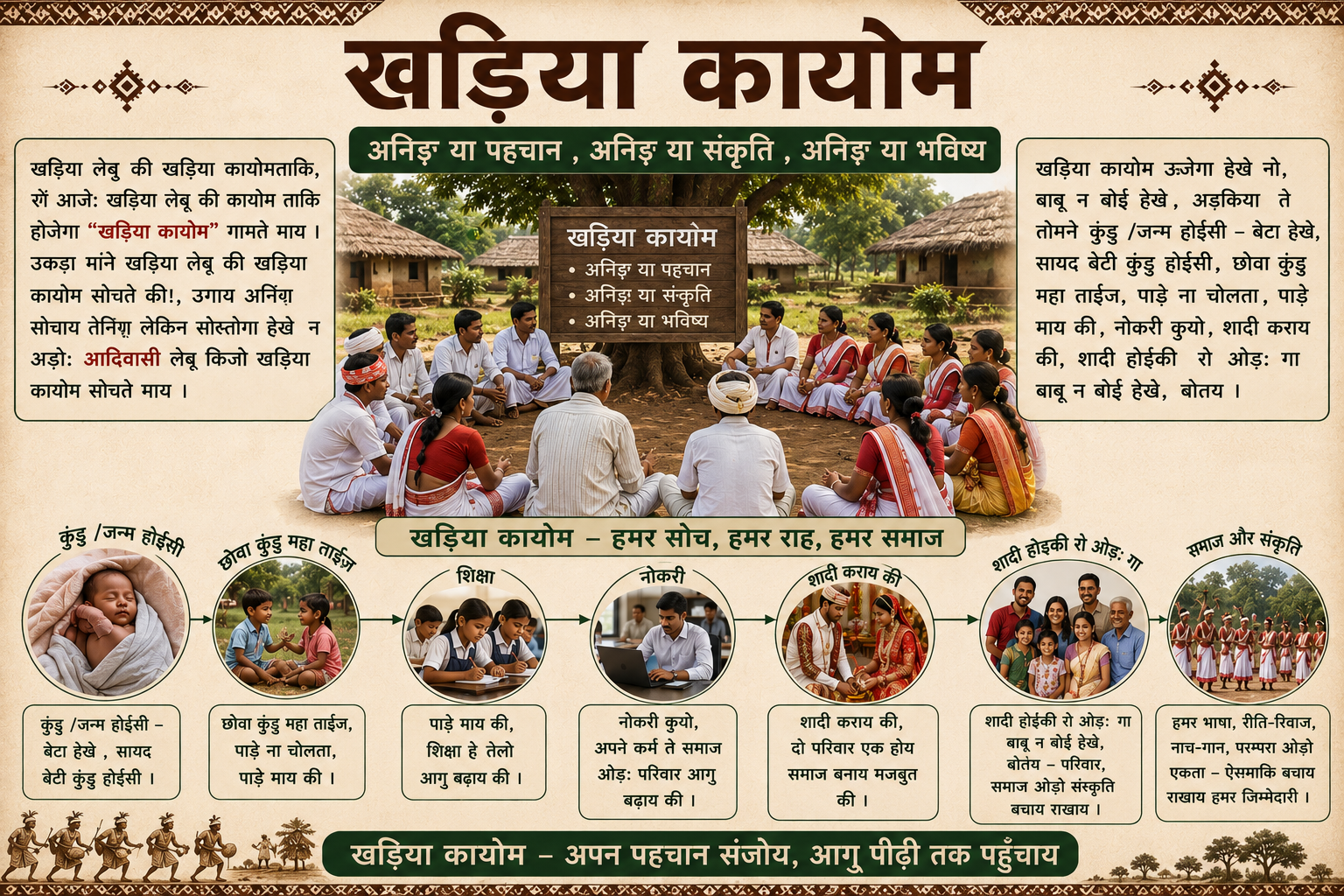
बाबू न बोई · कुडु
पिता और माता · बच्चा
Father and Mother · Child
बाबू न बोई हेखे
एक पिता और एक माता होते हैं।
There is a father and a mother.
"अड्किया ते तोनमे कुंडु/जन्म होईसी—बाबू हेखे, सायद बोई कुंडु होईसी।"
"उनके एक बच्चा जन्म लेता है—यदि वह लड़का है, तो उसे बाबू (पिता) कहा जाता है और यदि वह लड़की है, तो उसे बोई (माता) कहा जाता है।"
"A child is born to them—if it is a boy, he is called Babu (father), and if it is a girl, she is called Boi (mother)."
छोवा कुंडु महा ताईज़, पाढ़े ना चोलता, पाढ़े माय की।
बच्चा बड़ा होता है, पढ़ने जाता है और शिक्षा प्राप्त करता है।
The child grows up, goes to study, and is educated.
नोकरी कुयो, बिहा कराय की।
वह नौकरी करता है और विवाह करता है।
He gets a job and gets married.
बिहा होइकी रो ओड़: गा बाबू न बोई हेखे—बोतय।
विवाह के बाद वे भी पिता और माता बन जाते हैं—ऐसा कहा जाता है।
After marriage, they also become father and mother—it is said.
उघाय गा कुंडु होइना ताय, पाढ़े ना, कामू-कुयना, बिहा होइना ओड़ो परिवार बायना ब'तय खड़िया कायोम सरी सरी चोलता
ये सभी बातें—संतान उत्पन्न करना, शिक्षा प्राप्त करना, काम करना, विवाह करना और परिवार का पालन-पोषण करना—खड़िया भाषा के साथ-साथ निरंतर चलती रहती हैं।
All these things—having children, getting education, doing work, getting married, and raising a family—all continue along with the Kharia language.
अनिङ्ग या पूरखा · About Our Ancestors
वैज्ञानिक ओड़: मानवशास्त्री किया बुङ्ग खड़िया लेबुकी पुरखा ऑस्ट्रोएशियाटिक आदिवासी समज या वंशज हेखे की।
वैज्ञानिकों और मानवविज्ञानियों के अनुसार, खड़िया लोगों के पूर्वज ऑस्ट्रोएशियाई जनजातीय समुदाय के वंशज हैं।
According to scientists and anthropologists, the ancestors of the Kharia people are descendants of the Austroasiatic tribal community.
लगभग 3000 हज़ार से 4000 हज़ार साल सेंग दक्षिण-पूर्व एशिया ओड़: उत्तर विंध्य नदी घाटी तीताय डेलकोन छोटानागपुर पठार ठंडों ते बसे कीमाय।
लगभग 3,000 से 4,000 वर्ष पूर्व, वे दक्षिण-पूर्व एशिया तथा उत्तरी विंध्य नदी घाटी क्षेत्र से आए और छोटानागपुर पठार के विभिन्न क्षेत्रों में बस गए।
Approximately 3000 to 4000 thousand years ago, they came from Southeast Asia and the northern Vindhya river valley and settled in the places of the Chotanagpur Plateau.
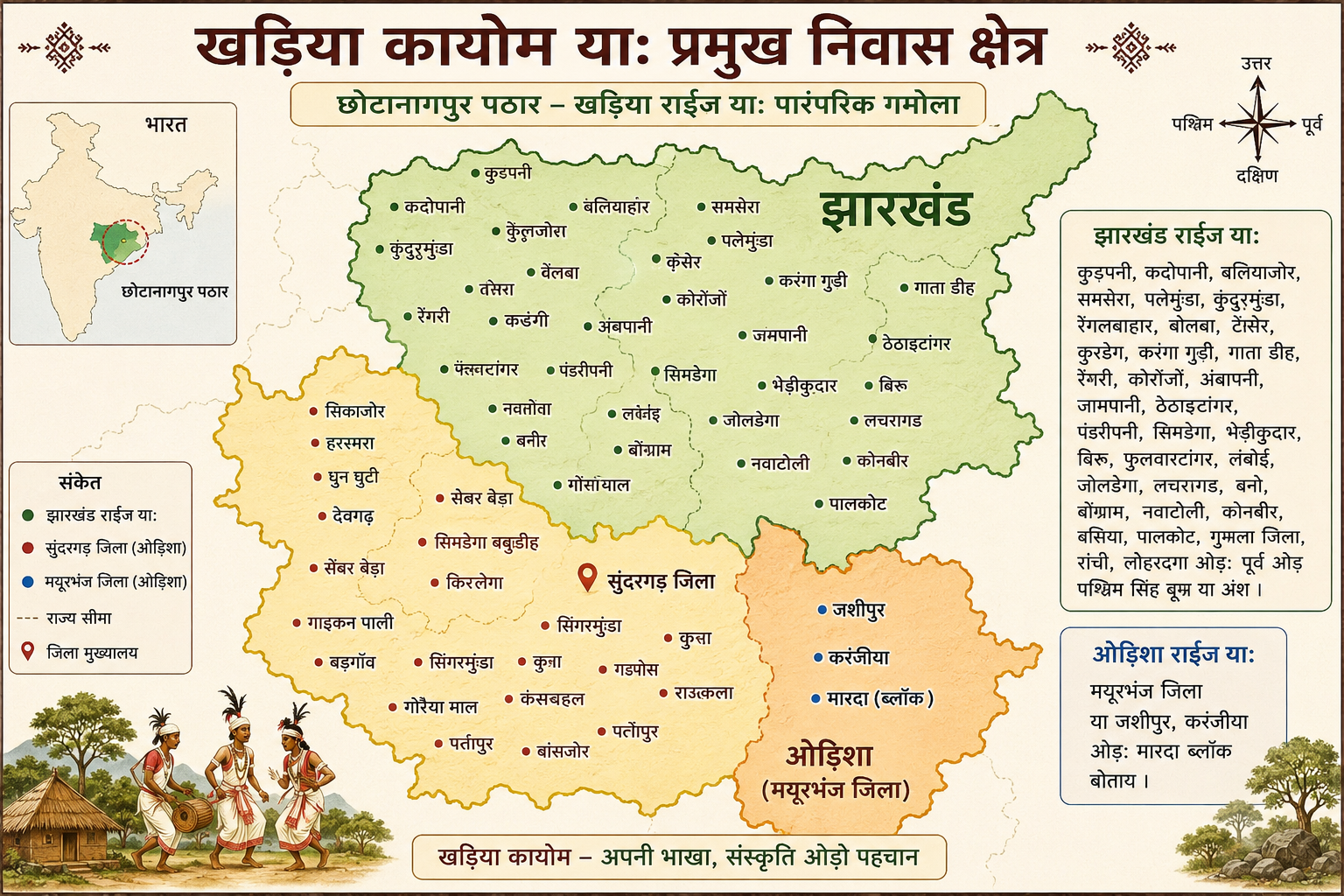
मुसाया हिसाब बुङ्ग छोटानागपुर पठार ठंडों गामोला ओड़ीशा या: सुंदरगड़ जिला या: सिकाजोरे, हरसमरा, घुन घुटी, लारियापली, देवगढ़, सेंबर बेड़ा, रेमड़ा, सिमडेगा बबुडीह, किरेलेगा, टंगार गाँव, गईकन पाली, बडगाँव, सिंगरमुंडा, कुत्रा, गड्पोस, डाईजीरा, गोरैया माल, कंसबहल, पीठामाल, पर्तापुर, बांसजोर, राउरकेला आदि।
इस विवरण के अनुसार, छोटानागपुर पठार के अंतर्गत ओडिशा के सुंदरगढ़ जिले में सिकाजोर, हरसमारा, घुनघुटी, लारियापाली, देवगढ़, सेम्बर बेड़ा, रेमड़ा, सिमडेगा बाबूडीह, किरेलेगा, टांगर गाँव, गैकेनपाली, बड़गाँव, सिंगारमुंडा, कुटरा, गड़पोस, दैजीरा, गोरैयामाल, कांसबहाल, पीठामाल, परतापुर, बांसजोर, राउरकेला आदि स्थानों में वे पाए जाते हैं।
According to this account, the villages of the Chotanagpur Plateau include in Odisha's Sundargarh district: Sikajore, Harsamara, Ghun Ghuti, Lariapali, Deogarh, Sember Beda, Remda, Simdega Babudih, Kirelega, Tangar village, Gaikan Pali, Badgaon, Singarmunda, Kutra, Gadpos, Daijira, Goraiya Mal, Kansbahal, Peethamal, Partapur, Bansjor, Rourkela, etc.
ओड़ो सम्बलपुर जिला या: घोसरगुड़ा, रेंगलबेड़ा, जमनकिरा, चीनी मोहुल, लोंकेसवारी, कुलुंडी, पाडियाबाहल आदि।
इसी प्रकार, संबलपुर जिले में घोषरगुड़ा, रेंगलबेड़ा, जामनकीरा, चीनी मोहुल, लोन्केश्वरी, कुलुंडी, पड़ियाबहाल आदि स्थानों में वे पाए जाते हैं।
And in Sambalpur district: Ghosarguda, Rengalbeda, Jamankira, Chini Mohul, Lonkeswari, Kulundi, Padiabahal, etc.
मयूरभंज जिला या जशीपुर, करंजीया ओड़: मारदा ब्लॉक बो:ताय।
मयूरभंज जिले में वे जशीपुर, करंजिया और मर्दा प्रखंडों में पाए जाते हैं।
In Mayurbhanj district, they are found in Jashipur, Karanjia, and Marda blocks.
ऊ लेखे गा: झारखंड राईज़ या कुड्पनी, कदोपानी, बलियाजोर, समसेरा, पलेमुंडा, कुंदुरमुंडा, रेंगलबाहार, बोलबा, टेंसेर, कुरडेग, करंगा गुड़ी, गाता डीह, रेंगरी, कोरोंजों, अंबापनी, जामपानी, ठेठाइटांगर, पंडरीपनी, सिमडेगा, भेड़ीकुदार, बिरु, फुलवारटांगर, लंबोई, जोलड़ेगा, लचरागड, बनो, बोंग्राम, आघारमा, नवाटोली, कोनबीर, बसिया, पालकोट, गुमला जिला, रांची, लोहरदगा ओड़: पूर्व ओड़ पश्चिम सिंह बूम या अंश।
इसी प्रकार, झारखंड राज्य में कुड़पानी, कड़ोपानी, बलियाजोर, समसेरा, पालमुंडा, कुंदरमुंडा, रेंगलबहाड़, बोलबा, टेंसर, कुरडेग, करंगागुड़ी, गाटाडीह, रेंगरी, कोरोनजोन, अंबापानी, जामपानी, ठेठईटांगर, पंडरीपानी, सिमडेगा, भेड़ीकुदर, बीरू, फुलवर्टांगर, लाम्बोई, जलडेगा, लचरागढ़, बानो, बोंगराम, अघरमा, नवाटोली, कोनबीर, बसिया, पालकोट, गुमला जिला, राँची, लोहरदगा तथा पूर्वी और पश्चिमी सिंहभूम के कुछ क्षेत्रों में वे पाए जाते हैं।
Similarly, in Jharkhand state: Kudpani, Kadopani, Baliajor, Samsera, Palemunda, Kundurmunda, Rengalbahar, Bolba, Tenser, Kurdeg, Karanga Gudi, Gata Dih, Rengri, Koronjon, Ambapani, Jampani, Thethaitangar, Pandripani, Simdega, Bhedikudar, Biru, Phulwartangar, Lamboi, Joldega, Lachragad, Bano, Bongram, Agharma, Nawatoli, Konbir, Basia, Palkot, Gumla district, Ranchi, Lohardaga, and parts of East and West Singhbhum.
पश्चिम बंगाल ओड़ो असम राईज़ या कुछ ठंडों ते खड़िया लेबू आईज़ की।
पश्चिम बंगाल और असम राज्यों के कुछ क्षेत्रों में भी खड़िया लोग पाए जाते हैं।
In West Bengal and Assam states, Kharia people are found in some places.
मुदा तुताते मोंज नकल ठंडों नक्सा, तमगा समय या अनुसार बाई-बाइ आइज़ :
लेकिन समय के साथ इन स्थानों का भौगोलिक स्वरूप और विस्तार अलग-अलग रूप में बदलता रहा है।
But the map of these places changes differently according to time.
खड़िया कायोम आदिवासी किया जियोम, विश्वास, रीति-रिवाज, कुइजना न अलोंगना, कायोम-बखेन, यात्रा-परब, यो'ना-उ'ड्न, सुना-अंकुना, चूड़ी-लोला, कनला-जड़ीबूटी, प्रकृति-दडोम, सामुदायिक प्रथा, पूर्वजों की स्मृति, कुंडु किटे पढायना लिखयना, बूढ़ा-बूढ़ी किते आदर, मिलेना-जुलेना, खेल-कूद, न्याय-व्यवस्था, बोरोलनाया पडोम, गोजलों-डांड कमुना, कुंवा पोखरा, बिरु ते जतन'ना, ओरेज मेरोन या बारे काँग'ना, मौसम-ज्ञान, खेती बारी, शिकार-विधि, कड़ोंग-धोआना, ओरेज गुपाना, टी'या कामू, लुतुय सीलोय, कोण्डेंग कंठ'डा, कूयू-भंडा, लोहा-लंकड़ कामू, दारू या कामू, अलोंग-दुरंग, डोलकी-मंदार, जैतवारी-साइलों, प्राकृतिक रंग-रोगन, अ'अ दुरा बायना, बिहा-शादी, गॉज'ना-संस्कार, आदर-परंपरा, जाइत-कुटुंब, टोला-पोदा, सभरी कामू, धरोहर-रक्षा, इतिहास-संरक्षण, भाषा-प्रचार, युवा-प्रशिक्षण, महिला-सशक्तिकरण, शिक्षा-प्रसार, स्वास्थ्य-जागरूकता, पर्यावरण-संरक्षण, पहचान-गर्व, एकता-सूत्र, भाईचारा, सहानुभूति, सहयोग, विकास-यात्रा, स्वावलंबन, आत्मनिर्भरता, सांस्कृतिक-गौरव, विश्व-पटल पर खड़िया की पहचान, मुगम पीढ़ि या थोङ्ग ज्ञान-भंडार, संवाद-सेतु, नवाचार, अध्यात्म-दृष्टि, प्रकृति-स्नेह, मानवता-सेवा, समरसता, शांति, प्रगति, सुख, आनंद, उत्साह, जोश, भक्ति, विश्वास, करुणा, सेवा, सम्मान, प्रेम, सौहार्द, और संकल्प — यह सब खड़िया कायोम का अंश है।
खड़िया समुदाय का जीवन—उनकी मान्यताएँ, रीति-रिवाज, संस्कार, अनुष्ठान, पूजा और प्रार्थना, कहानियाँ और गीत, त्योहार और यात्राएँ, खान-पान, पहनावा और आभूषण, जड़ी-बूटियाँ और औषधियाँ, प्रकृति के प्रति प्रेम, सामुदायिक परंपराएँ, पूर्वजों का स्मरण, बच्चों की शिक्षा, बुजुर्गों का सम्मान, आपसी सद्भाव और एकजुटता, खेल-कूद, न्याय व्यवस्था, ग्राम शासन, जंगलों में शिकार और वन-संग्रह, कुएँ और तालाब, वनों की रक्षा, मौसम संबंधी ज्ञान, कृषि और खेती, शिकार करने की विधियाँ, आग जलाना और भोजन पकाना, वर्षा और धूप, हस्तशिल्प, कताई और बुनाई, धनुष-बाण बनाना, टोकरी और मिट्टी के बर्तन बनाना, लोहे और लकड़ी का काम, पारंपरिक मदिरा बनाना, गीत और नृत्य, ढोल और मांदर, त्योहार और उत्सव, प्राकृतिक रंग और रंगाई, पारंपरिक खेल, विवाह और शादी की परंपराएँ, मृत्यु और अंतिम संस्कार की विधियाँ, सम्मान और परंपराएँ, गोत्र और परिवार, समुदाय और गाँव, सामूहिक श्रम, विरासत की रक्षा, इतिहास का संरक्षण, भाषा का प्रचार-प्रसार, युवाओं का प्रशिक्षण, महिला सशक्तीकरण, शिक्षा का प्रसार, स्वास्थ्य जागरूकता, पर्यावरण संरक्षण, अपनी पहचान पर गर्व, एकता का बंधन, भाईचारा, सहानुभूति, सहयोग, विकास की यात्रा, आत्मनिर्भरता, स्वावलंबन, सांस्कृतिक गौरव, विश्व मंच पर खड़िया पहचान, आने वाली पीढ़ियों के लिए ज्ञान का भंडार, संचार का सेतु, नवाचार, आध्यात्मिक दृष्टि, प्रकृति के प्रति प्रेम, मानवता की सेवा, सद्भाव, शांति, प्रगति, सुख, आनंद, उत्साह, उमंग, भक्ति, विश्वास, करुणा, सेवा, सम्मान, प्रेम, सद्भावना और दृढ़ संकल्प—ये सभी खड़िया समुदाय के जीवन का अभिन्न हिस्सा हैं।
The life of the Kharia community, their beliefs, customs, rituals, worship and prayer, stories and songs, festivals and journeys, eating and drinking, dress and ornaments, herbs and medicines, love for nature, community practices, remembrance of ancestors, education of children, respect for elders, harmony and togetherness, sports and games, justice system, village governance, hunting and gathering in forests, wells and ponds, protection of forests, knowledge about weather, agriculture and farming, hunting methods, fire-making and cooking, rain and sunshine, handicrafts, spinning and weaving, making bows and arrows, making baskets and pots, iron and wood work, making traditional liquor, songs and dances, drum and mandar, festivals and celebrations, natural colors and dyes, traditional games, marriage and weddings, death and funeral rites, respect and traditions, caste and family, community and village, collective work, protection of heritage, preservation of history, language promotion, youth training, women empowerment, education spread, health awareness, environmental protection, pride in identity, unity bond, brotherhood, empathy, cooperation, journey of development, self-reliance, self-sufficiency, cultural pride, identity of Kharia on the world stage, knowledge treasure for future generations, bridge of communication, innovation, spiritual vision, love for nature, service to humanity, harmony, peace, progress, happiness, joy, enthusiasm, zeal, devotion, faith, compassion, service, respect, love, goodwill, and determination — all this is part of the Kharia community.
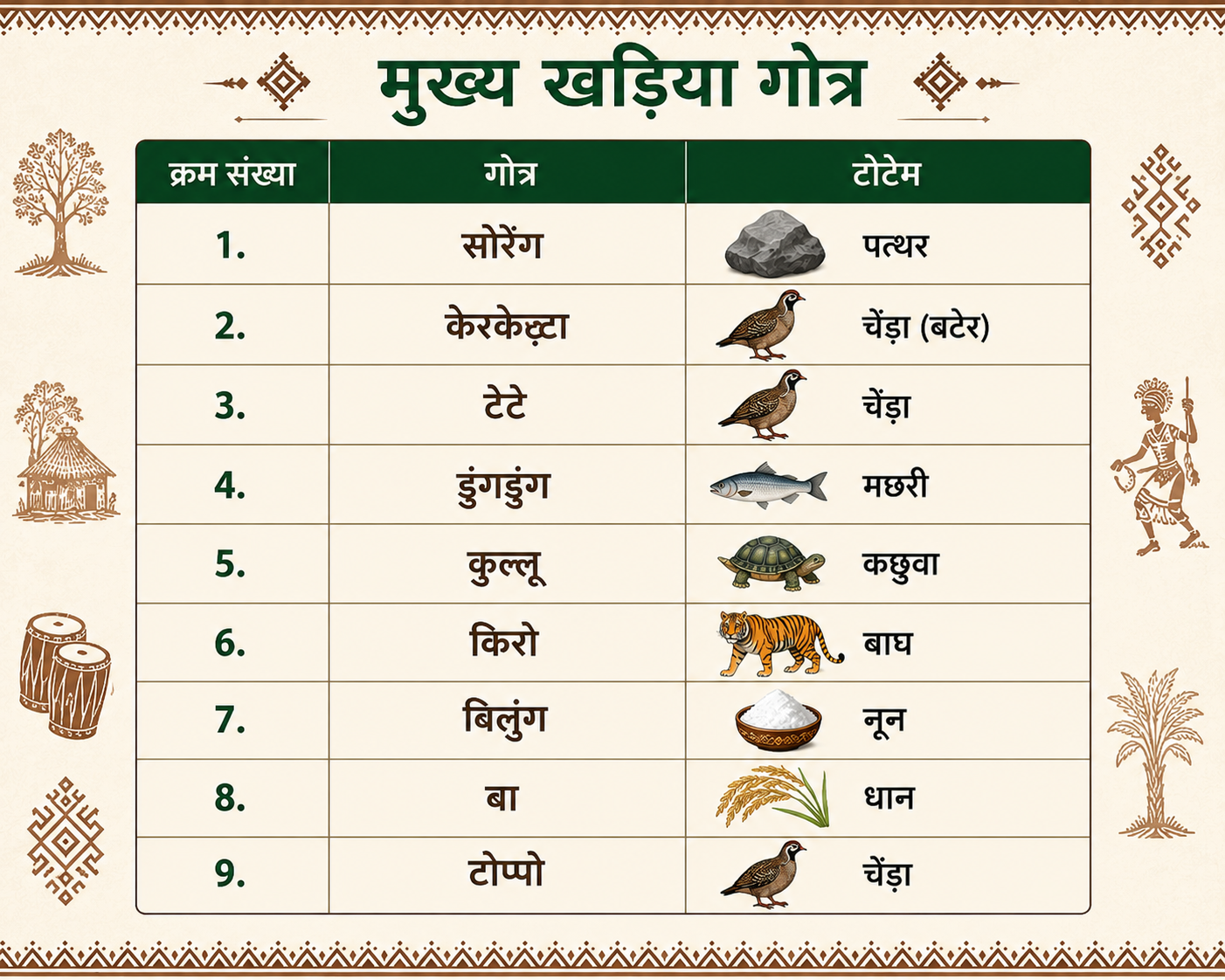
अनीङ्ग खड़िया किया भुईयार · Our Kharia Clans
अनीङ्ग खड़िया किया भुईयार(गोत्र)
हमारे खड़िया गोत्र
Our Kharia Clans (Gotras)
भुईयार (गोत्र) सो:बगा अवता। लेबुकिते ऊ भुईयार (गोत्र) बुङ्ग गा काँगडोम ता।
गोत्र अनेक हैं। लोगों की पहचान उनके गोत्र के आधार पर की जाती है।
Clans (Gotras) are numerous. People are identified by their clan (gotra).
कुछ भुईयार(गोत्र) उजे की हेखे :
कुछ प्रमुख गोत्र निम्नलिखित हैं:
Some of the clans (gotras) are as follows:
- सोरेंग
- सोरेंग
- Soreng
- केरकेट्टा
- केरकेट्टा
- Kerketta
- टेटे
- टेटे
- Tete
- डुंगडुंग
- डुंगडुंग
- Dungdung
- कुल्लू (Kullu)
- कुल्लू
- Kullu
- किरो / किडो
- किरो / किडो
- Kiro / Kido
- बिलुंग (Bilung)
- बिलुंग
- Bilung
- बाः (Baa)
- बा
- Baa
- टोप्पो (Toppo)
- टोप्पो
- Toppo
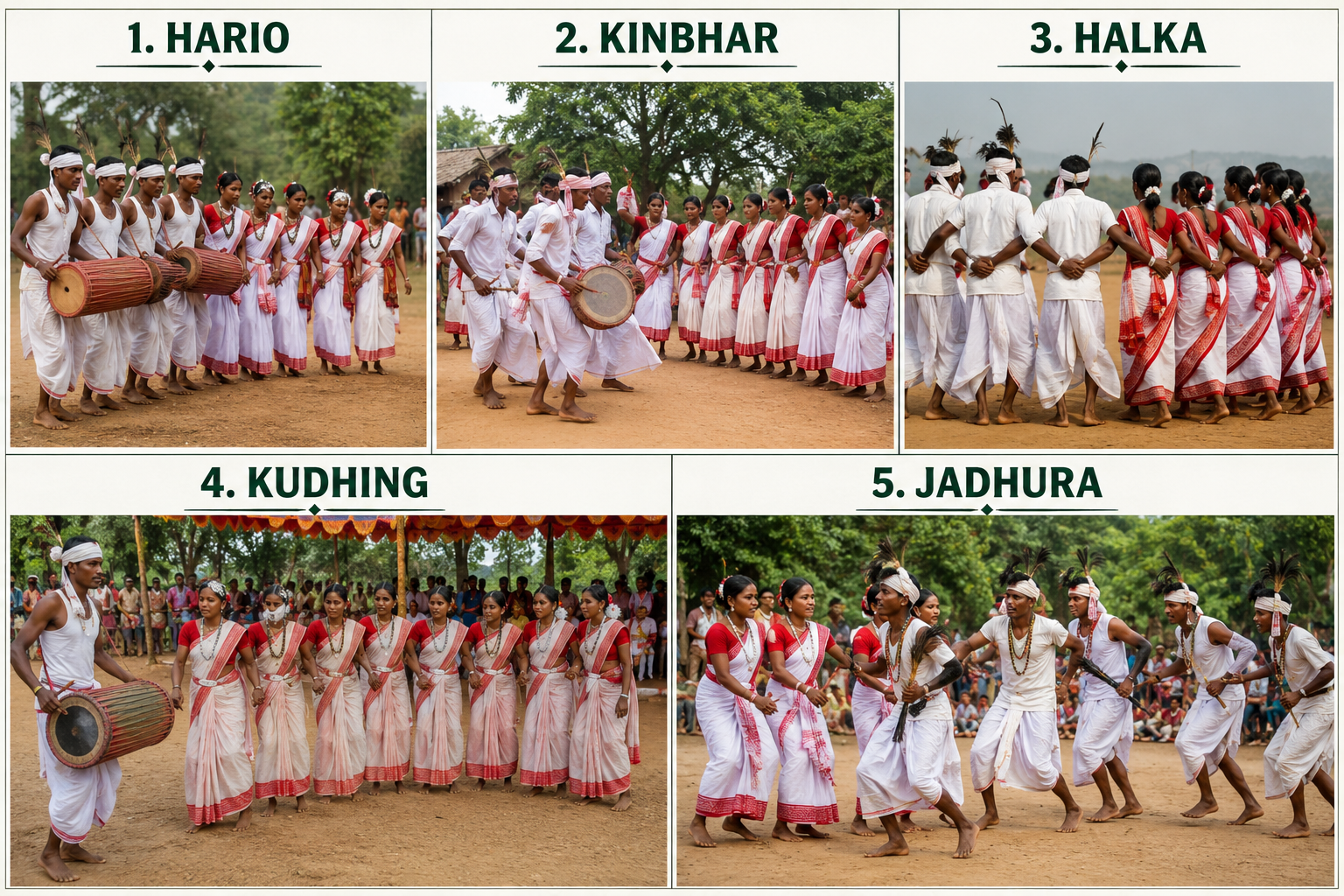
कुईजना ओड़ो: दुरांग · Dance and Songs
खड़िया संस्कृति ते कुईजना -अलोंग दुरंग ना याः खास /महत्व आइज़। परब -त्योहार ओड़ो खुशी समय ते टोला पड़ा या सोब कुंडु -लुतुर, कपडु -कोनसेल, बेटा-बेटी कि, आखेड़ा ते जुम्मे कोन अलोंग दुरांग ओड़ो कुईज़ कन खुशी मनयतेकी।
खड़िया संस्कृति में नृत्य और गीतों का विशेष महत्व है। त्योहारों और खुशी के अवसरों पर समुदाय के सभी लोग—बूढ़े और जवान, पुरुष और महिलाएँ, लड़के और लड़कियाँ—अखाड़ा (नृत्य स्थल) में एकत्रित होते हैं और गीत गाते तथा नृत्य करते हुए हर्षोल्लास के साथ उत्सव मनाते हैं।
Dance and songs have special importance in Kharia culture. During festivals and times of happiness, all the people of the community - young and old, men and women, boys and girls - gather in the akhada (dancing ground) and celebrate with joy by singing songs and dancing.
खास खास कुईज़ना:
प्रमुख नृत्य:
Special dances:
- हारियो
- हरियो
- Hariyo
- किनभर
- किनभर
- Kinbhar
- हल्का
- हलका
- Halka
- कुढिंग
- कुड़िंग
- Kudhing
- जाधुरा
- जधुरा
- Jadhura
धारम, पाराब ओड़ो: विश्वास · Religion, Festivals, and Beliefs
धारम, पाराब ओड़ो: विश्वास
धर्म, त्योहार और मान्यताएँ
Religion, Festivals, and Beliefs
खड़िया लेबू की अड़ो आदिवासी किया लेखेगा प्रकृति या दाडोम (पूजा) जैसेन की सूरज, डा:आ (जल), बिरु (जंगल), कोयो (हवा) ओड़ो तिरीब उसलों या अब्बा ते माने ताकि।
अन्य जनजातीय समुदायों की तरह, खड़िया लोग भी प्रकृति की पूजा करते हैं, जैसे सूर्य, दाः (जल), बिरु (जंगल/वन), कोयो (वायु) आदि। वे ब्रह्मांड की सर्वोच्च सत्ता में भी विश्वास रखते हैं।
Like other tribal communities, the Kharia people worship nature (puja) such as the Sun, Da:a (water), Biru (forest), Koyo (air), and they believe in the Supreme Being of the universe.
खड़िया लेबू की माघ परब, फगुआ / फगुन पर्व, सरहुल, जानी शिकार, नवाखानी, बंदई पार्ब, सोहराय पराब साल भरते ते होडोम होडोम महिना ते मानाय तेकी।
खड़िया लोग वर्ष भर अलग-अलग महीनों में माघ परब, फगुआ/फागुन पर्व, सरहुल, जानी शिकार, नवाखानी, बंदई परब और सोहराई परब जैसे त्योहार मनाते हैं।
The Kharia people celebrate Magh Parab, Fagua/Fagun festival, Sarhul, Jani Shikar, Nawakhani, Bandai Parab, and Sohrai Parab throughout the year in different months.
खड़िया लेबू
खड़िया लोग
The Kharia People
मुदा ऊ उसलो ते लगभग 3–4 लाख खड़िया लेबू की समाज संस्कृति, कायोम ओड़: पहचान या सोरी जीवन बिताय तेज कि।
वर्तमान में इस संसार में लगभग 3–4 लाख खड़िया लोग अपने समाज, संस्कृति, भाषा और पहचान के साथ जीवन जी रहे हैं।
But in this world, approximately 3-4 lakh Kharia people are living their lives with their own society, culture, language, and identity.
2011 या यीमी ओडेब या हिसाब से कुल खड़िया लेबू किया गिनती या: लगभग 69% लेबू की, केवल खड़िया कायोम सोचते माय। लगभग 2.2 लाख से 2.8 लाख खड़िया लेबू बेस'बो खड़िया कायोम सोचते निङ्ग ओड़: निरंतर कायोम तनिङ्ग। ओड़ो करीब करीब 50,000 तय से 80,000 खड़िया लेबू की थोड़े थोड़े खड़िया कायोम सोचते की /बुझी ताकि। मुदा कुंडु की खड़िया कायोम ऊमय सोचते र सीखे ना ज उमाय लामते।
2011 की जनगणना के अनुसार, कुल खड़िया जनसंख्या में से लगभग 69% लोग केवल खड़िया भाषा बोलते हैं। लगभग 2.2 लाख से 2.8 लाख खड़िया लोग खड़िया भाषा अच्छी तरह बोलते हैं और निरंतर इसका प्रयोग करते हैं। लगभग 50,000 से 80,000 खड़िया लोग खड़िया भाषा थोड़ी-बहुत बोलते या समझते हैं। लेकिन कुछ ऐसे लोग भी हैं जो खड़िया भाषा बोल नहीं सकते और इसे सीख भी नहीं रहे हैं।
According to the 2011 census, out of the total Kharia population: approximately 69% of people only speak the Kharia language. About 2.2 lakh to 2.8 lakh Kharia people speak the Kharia language well and continuously use the language. And approximately 50,000 to 80,000 Kharia people speak/understand the Kharia language a little. But there are some who cannot speak the Kharia language and are not even learning it.
खड़िया लेबुकी खड़िया कायोम सरी सादरी, हिन्दी, ओडिया, इंग्लिश कायोम की ज सोच तेकी।
खड़िया भाषा के साथ-साथ खड़िया लोग सदरी, हिंदी, ओड़िया और अंग्रेजी भाषाएँ भी बोलते हैं।
Along with the Kharia language, Kharia people also speak Sadri, Hindi, Odia, and English languages.
खड़िया कायोम की
खड़िया भाषा
The Kharia Language
खड़िया लेबुकी खड़िया कायोम ईडिब तुनबो: मेया:(मॉर्निंग) बो:ताय रेबेड रेबेड कायोम ताकि। कायोम काम-उदाम, ओ:ओ- दुरा, टोला-पौदा, बाज़ार-हट, कीनिर-झंकोड, नैयार सोसरेल, चौवा -पूता, हनकड़ा-ऊकडा या बारे, राकाम राकाम या कायोम ताकि।
खड़िया लोग सुबह से शाम तक विभिन्न परिस्थितियों में खड़िया भाषा बोलते हैं। काम-काज, घर-परिवार, समाज और गाँव, बाजार और हाट, खरीद-बिक्री, पड़ोस और रिश्तेदारों, बच्चों और पोते-पोतियों तथा अच्छी-बुरी बातों से संबंधित विभिन्न परिस्थितियों में इस भाषा का प्रयोग किया जाता है।
Kharia people speak the Kharia language from morning till evening in different situations. The language is spoken in various contexts such as work-related matters, home and house, community and village, market and haat, buying and selling, neighborhood and relatives, children and grandchildren, about good and bad things.
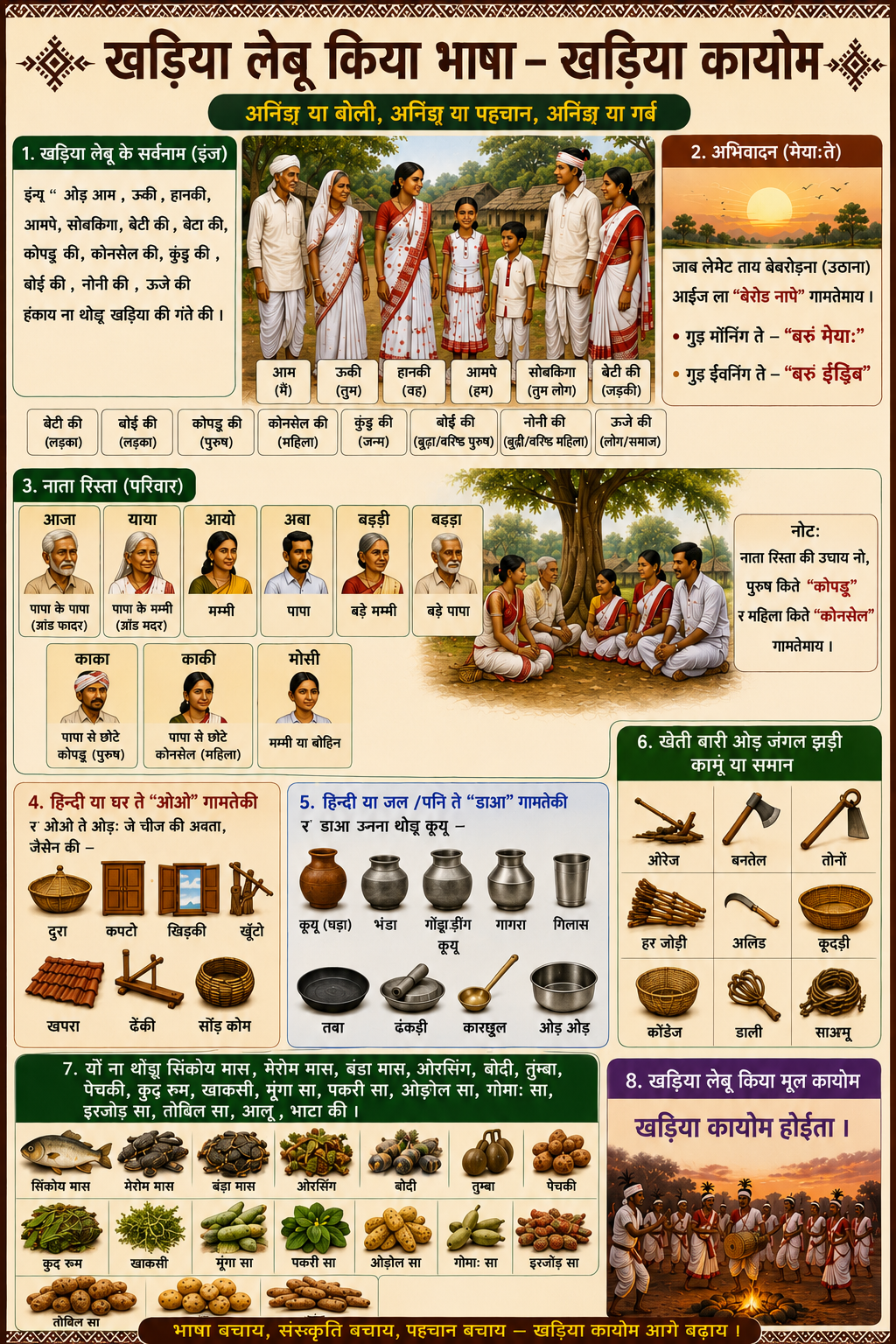
"इञ्ज-आम, ऊकी-हानकी, एलेकी-आमपेकी, झड़िकिगा, सोबकिगा, बेरोड ना, अनरगिना, बसी पे योंगे, स्कूल धाय, सिलो'ना धाय, बिरु सोंगोल ओलना धाय ऊघाय कायोम रोज रोज आयो -अब्बा की, बेटी की, बेटा की, कांडाय की, कोपडु की, कोनसेल की, कुंडु की, बोई की, नोनी की, कीमिन कि, बोहोरिया कि कायोम ताकि।
“तुम और मैं, वह और वह, वे और तुम सब, दादी और दादा, उठो, सो जाओ, बैठो और खाओ, स्कूल जाओ, मवेशी चराने जाओ, जंगल से लकड़ी लाने जाओ”—इस प्रकार के शब्द खड़िया भाषा में माता-पिता, बेटी और बेटा, लड़का और लड़की, पुरुष और महिला, बच्चे और बुजुर्ग, भाभी और बहन, पत्नी और बहू आदि द्वारा प्रतिदिन बोले जाते हैं।
"You and I, he and she, they and you all, grandmother and grandfather, get up, go to sleep, sit down and eat, go to school, go to graze cattle, go to bring wood from the forest" - these kinds of words are spoken daily by mother and father, daughter and son, boy and girl, man and woman, child and elderly, sister-in-law and sister, wife and daughter-in-law in the Kharia language.
मेया:ते (Morning) जाब लेमेड ताय बेवरोडना थोंग "बेरोड नापे" गामतेमाय। गुड मॉर्निंग ते "बरु मेया:" ओड़: गुड ईवनिंग ते "बरु ईडिब" गामतेमाय।
सुबह जब कोई उठता है, तो “Berod nape” (क्या तुम उठ गए?) कहा जाता है। सुप्रभात के लिए “Baru meya:” और शुभ संध्या के लिए “Baru idib” कहा जाता है।
In the morning, when someone gets up in the morning, "Berod nape" (Did you get up?) is said. For Good Morning, "Baru meya:" and for Good Evening, "Baru idib" is said.
नाता रिस्ता
रिश्ते-नाते
Relationships
नाता रिस्ता की उघाय नो, पुरुष किते "कोपडु" र महिला किते "कोनसेल", पापा के पापा, ग्रांड फादर ते "आजा", पापा के मम्मी, ग्रांड मदर ते "याया", मम्मी को "आयो"/ आयोडोम/ मडोम, पापा को "अबा" बड़े मम्मी को "बड्डी", बड़े पापा को "बड्डा", पापा से छोटे कोपडु (पुरुष) लेबुकिते "काका", पापा से छोटे कोनसेल (महिला) किते "काकी", मम्मी या बोहिन ते "मोसी" इत्यादि।
रिश्तों में पुरुष को “Kopadu” और महिला को “Konsel” कहा जाता है। पिता के पिता (दादा) को “Aaja”, पिता की माता (दादी) को “Yaya”, माता को “Aayo”/“Ayodom”/“Madom”, पिता को “Aba”, बड़ी माता को “Baddi”, बड़े पिता को “Badda”, पिता से छोटे पुरुषों को “Kaka”, पिता से छोटी महिलाओं को “Kaki”, और माता की बहन को “Mosi” आदि कहा जाता है।
In relationships, a man is called "Kopadu" and a woman is called "Konsel". Father's father (grandfather) is called "Aaja", father's mother (grandmother) is called "Yaya", mother is called "Aayo"/"Ayodom"/"Madom", father is called "Aba", elder mother is called "Baddi", elder father is called "Badda", men younger than father are called "Kaka", women younger than father are called "Kaki", mother's sister is called "Mosi", etc.
हिन्दी या घर ते खड़िया बुङ्ग "ओ'ओ" गामतेकी। ओ'ओ ते जे जिनिस की अवता, जैसेन की "दुरा", कपटो, खिड़की, खूँटो, भीत, तेलोंग, ब'ता, धारना, खपरा, ढेंकी, सॉड़ कोम, झेंतु, जन:, बकसा आदि।
हिंदी में “घर” को खड़िया भाषा में “O'o” कहा जाता है। घर में मौजूद विभिन्न वस्तुओं के लिए “Dura” (दरवाजा), Kapto (दरवाजे की चौखट), Khidki (खिड़की), Khunto (खंभा/स्तंभ), Bheet (दीवार), Telong (छत की कड़ी), Ba'ta (छत की बल्ली/राफ्टर), Dharna (कड़ी/बीम), Khapra (खपरैल), Dhenki (धान कूटने का उपकरण), Saad kom (हल), Jhentu (झाड़ू), Jan: (पीसने का पत्थर), Baksa (बक्सा) आदि शब्दों का प्रयोग किया जाता है।
In Hindi, "Ghar" (house) is called "O'o" in Kharia. In a house, whatever things are there, such as "Dura" (door), Kapto (door frame), Khidki (window), Khunto (pillar/post), Bheet (wall), Telong (roof beam), Ba'ta (rafter), Dharna (beam), Khapra (roof tile), Dhenki (husking lever), Saad kom (plow), Jhentu (broom), Jan: (grinding stone), Baksa (box), etc.
हिन्दी या जल /पनि ते "डाआ" गामतेकी। डाआ ऊनना थोङ्ग कूयू, भंडा, बिंडा गोङ्गडींग कूयू, गागरा, गिलास, तवा, ढंकड़ी, कारछुल की अवता।
हिंदी में “जल/पानी” को खड़िया भाषा में “Da:a” कहा जाता है। पीने के पानी से संबंधित वस्तुओं में Kuyu (कुआँ), Bhanda (घड़ा/बर्तन), Binda Gongding Kuyu (छोटा पानी रखने का बर्तन), Gagra (गगरा), Gilas (गिलास), Tawa (तवा), Dhankadi (ढक्कन), Karchhul (करछुल) आदि शामिल हैं।
In Hindi, "Jal"/"Pani" (water) is called "Da:a" in Kharia. For drinking water, there are Kuyu (well), Bhanda (pot), Binda Gongding Kuyu (small water pot), Gagra (water pitcher), Gilas (glass), Tawa (flat pan), Dhankadi (lid), Karchhul (ladle), etc.
ओरेज गुड़ा ते दिगतंग अ'अ गंतेमय। ओरेज़, बनतेल, तोनों, हर जोड़ी, अलिड, कूदडी, कोंडेज, डाली, साआमू, ऊ खड़िया यीमी की खेती बारी ओड़ जंगल झड़ी कामू या समान हेखे।
वर्षा और धूप के लिए विभिन्न शब्दों का प्रयोग किया जाता है। Orez (वर्षा), Bantel (बादल), Tonon (सूर्य), Har Jodi (बिजली/आकाशीय बिजली), Alid (गर्जन), Kuddi (ओले), Kondej (हवा), Dali (ओस), Saamoo (इंद्रधनुष)—ये खड़िया लोगों के वे शब्द हैं जो कृषि, खेती और वन कार्यों से संबंधित हैं।
For rain and sunshine, various words are used. Orez (rain), Bantel (clouds), Tonon (sun), Har Jodi (lightning), Alid (thunder), Kuddi (hail), Kondej (wind), Dali (dew), Saamoo (rainbow) — these are the words of Kharia people related to agriculture, farming, and forest work.
यों'ना थोङ्ग सिंकोय मास, मेरोम मास, बंडा मास, ओरसिंग, बोदी, तुम्बा, पेचकी, कुद रूम, खाकसी, मूंगा सा, पकरी सा, ओड़ोल सा, गोमा: सा, इरजोड़ सा, तोबिल सा, आलू, भाटा की।
भोजन के लिए Sinkoy Mas (मुर्गे का मांस), Merom Mas (बकरे का मांस), Banda Mas (सूअर का मांस), Orsing (हिरन), Bodi (बटेर), Tumba (खेत का चूहा), Pechki (छोटा पक्षी), Kud Rum (मशरूम/कुकुरमुत्ता), Khaksi (केकड़ा), Munga Sa (हरी पत्तेदार सब्जी), Pakri Sa (पालक), Odol Sa (एक प्रकार की पत्तेदार सब्जी), Goma: Sa (कद्दू के पत्ते), Irjod Sa (एक प्रकार की पत्तेदार सब्जी), Tobol Sa (एक प्रकार की पत्तेदार सब्जी), Aaloo (आलू), Bhata (बैंगन) आदि का उल्लेख मिलता है।
For eating, there are Sinkoy Mas (chicken meat), Merom Mas (goat meat), Banda Mas (pork), Orsing (deer), Bodi (quail), Tumba (field rat), Pechki (small bird), Kud Rum (mushroom), Khaksi (crab), Munga Sa (green leafy vegetable), Pakri Sa (spinach), Odol Sa (a type of leafy vegetable), Goma: Sa (pumpkin leaves), Irjod Sa (a type of leafy vegetable), Tobol Sa (a type of leafy vegetable), Aaloo (potato), Bhata (brinjal/eggplant), etc.
यो'ना थोंग जे साज समान अवता हॉकी ते थरिया, डुबनी, तसकी, डुभा, पिरिच, कसा गिलास की गमते माय।
भोजन के लिए घर में उपयोग किए जाने वाले बर्तनों को Thariya (थाली), Dubni (छोटी कटोरी), Taski (कटोरी), Dubha (बड़ी कटोरी), Pirich (प्लेट), Kasa Gilas (कांसे का गिलास) आदि कहा जाता है।
For eating, whatever utensils are there in the house are called Thariya (plate), Dubni (small bowl), Taski (bowl), Dubha (large bowl), Pirich (plate), Kasa Gilas (bronze glass), etc.
सूना अंकुना साजो सामन किते कोनसेल किया साड़ी, साया, फ्रॉक ब्लाउज़, लुतुर या लो'ल, कोपडु किया लूँगी, धोती, पाइजमा, गाँजी, झूला की अवता। हिन्दी या कपड़ा ते लुतुय, कमीज ते झूला गमतेकी। कमीज पहनो ते खड़िया बुंग "झूला सुए" गमतेकी।
पहनावे और वस्त्रों में महिलाओं के लिए Saadi (साड़ी), Saaya (साया/पेटीकोट), Frock, Blouse, Lutur ya Lo'l (कान की बालियाँ) आदि हैं। पुरुष Lungi (लुंगी), Dhoti (धोती), Pajama (पायजामा), Ganji (बनियान), Jhoola (कमीज/शर्ट) आदि पहनते हैं। हिंदी में “कपड़ा” को खड़िया भाषा में “Lutuy” और “कमीज/शर्ट” को “Jhoola” कहा जाता है। खड़िया भाषा में शर्ट पहनने को “Jhoola sue” कहा जाता है।
For wearing and dressing, women have Saadi (saree), Saaya (underskirt), Frock Blouse, Lutur ya Lo'l (earrings). Men have Lungi, Dhoti, Pajama, Ganji (vest), Jhoola (shirt), etc. In Hindi, "Kapda" (cloth) is called Lutuy in Kharia, "Kamij" (shirt) is called Jhoola. Wearing a shirt is called "Jhoola sue" in Kharia.
ऊजे किगा खड़िया लेबू किया मूल कायोम - खड़िया कायोम होइता।
इन सभी बातों से स्पष्ट होता है कि खड़िया लोगों की मूल भाषा खड़िया भाषा है।
From all this, the original language of the Kharia people is the Kharia language.
मतलब
अर्थ / उद्देश्य
Meaning / Purpose
Khadia Kayom" वेबसाइट या मतलब खड़िया समाज / समुदाय या कायोम (भाषा), संस्कृति, परंपरा, अलोंग दुरंग, रीति-रिवाज, इतिहास, सामाजिक पहचान ओड़: शैक्षणिक जानकारी ते संरक्षित, प्रोत्साहित और साझा करना थोङ्ग हेखे। ऊ वेबसाइट ते जे कायोम ओड़ प्रकाशित आइज़ अनिञ्ज या जानकारी या थोङ्ग, सांस्कृतिक जागरूकता, शैक्षणिक मतलब-उद्देश्य थोङ्ग प्रदान कराय डोम ताज।
“खड़िया कायोम” वेबसाइट का उद्देश्य खड़िया समाज/समुदाय की भाषा (कायोम), संस्कृति, परंपराओं, गीतों और नृत्यों, रीति-रिवाजों, इतिहास, सामाजिक पहचान तथा शैक्षिक जानकारी का संरक्षण, प्रचार-प्रसार और साझा करना है। इस वेबसाइट पर प्रकाशित भाषा और सामग्री सूचना प्रदान करने, सांस्कृतिक जागरूकता बढ़ाने तथा शैक्षिक उद्देश्यों के लिए उपलब्ध कराई गई है।
The purpose of the "Khadia Kayom" website is to preserve, promote, and share the Kharia society/community's language (kayom), culture, traditions, songs and dances, customs, history, social identity, and educational information. The language and content published on this website is provided for informational purposes, cultural awareness, and educational objectives.
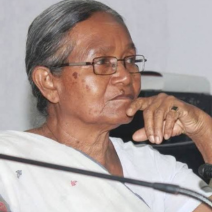
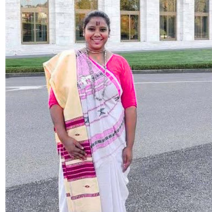
प्रसिद्ध खड़िया व्यक्तित्व


तमगा हालत · Present Condition
तमगा हालत
वर्तमान स्थिति
Present Condition
अनिङ्ग खड़िया लेबू किया ऊ समय ते समज, शेक्षिक, सांस्कृतिक, आर्थिक अवस्था अच्छा उम्बोडीज़। अनिङ्ग या राजनीतिक र सामाजिक भागीदारी जो अच्छा आईज़ ऊगाय गमना एकदम से ठीक ऊम होइना। अनिङ्ग संख्या बुङ्ग मुरुक कामती आईज़ निङ्ग। गरीब, शिखया या कमी, नोकरी चकरी या बुरा हालत या थोङ्ग होडोम रईज़ कमुना चोलता निङ्ग, सिड गोतानिङ्ग र अनिङ्ग या ईजात-महत ते डुबाय गोड्तेज नीङ्ग।
वर्तमान समय में हमारे खड़िया लोगों की सामाजिक, शैक्षिक, सांस्कृतिक और आर्थिक स्थिति अच्छी नहीं है। हमारी राजनीतिक और सामाजिक भागीदारी भी उतनी अच्छी नहीं है, जितनी होनी चाहिए। यह स्थिति बिल्कुल उचित नहीं है। हमारी जनसंख्या भी धीरे-धीरे कम हो रही है। गरीबी, शिक्षा की कमी और रोजगार की खराब स्थिति के कारण हमारे लोग अपनी भूमि छोड़कर दूसरे राज्यों में पलायन कर रहे हैं, जिससे हम अपनी प्रतिष्ठा और सम्मान भी खो रहे हैं।
At this time, the social, educational, cultural, and economic condition of our Kharia people is not good. Our political and social participation is not as good as it should be. Saying this is not at all right. Our population is also slowly decreasing. Due to poverty, lack of education, and poor condition of employment, our people are migrating to other states, leaving their land and losing our honor and respect.
खड़िया कायोम, खड़िया संस्कृति, इतिहास, अलोंग - दुरांग, कुइजना-लेंगना, पुरखा कायोम कथा, समाजिक जानकारी ओड़ मूगाम बढ़े ना थोङ्ग आयपे झड़ी गा एके सोरी जोड़य डम नानिङ्ग।
खड़िया भाषा, खड़िया संस्कृति, इतिहास, गीत-संगीत, नृत्य और प्रस्तुतियों, पूर्वजों की कहानियों तथा सामाजिक ज्ञान को संरक्षित करने और आगे बढ़ाने के लिए हमें एक स्थान पर एकजुट होना होगा तथा इन्हें आने वाली पीढ़ी तक पहुँचाना होगा।
We must join together in one place to preserve and carry forward the Kharia language, Kharia culture, history, songs and music, dance and performances, ancestral stories, social knowledge, and pass them on to the next generation.
"खड़िया कायोम, संस्कृति बंचय उन्ना थोङ्ग अनिङ्ग झड़ीकिगा जिम्मेदारी होइतानिङ्ग।"
“खड़िया भाषा और संस्कृति को बचाना हम सभी की जिम्मेदारी है।”
"To save the Kharia language and culture is the responsibility of all of us."
संदेश
संदेश
Message
"कायोम बच्चेनाला: संस्कृति बच्चेना, संस्कृति बच्चेनाला: पूरा खड़िया समाज (लेबू) बच्चेना'निङ्ग।"
“यदि भाषा बचेगी, तो संस्कृति बचेगी; यदि संस्कृति बचेगी, तो पूरा खड़िया समाज (समुदाय) सुरक्षित रहेगा।”
"If the language is saved, the culture will be saved; if the culture is saved, the entire Kharia community (people) will be saved."
एले खड़िया कायोम तले र बेहार ऊम सोचते होकिजों, खड़िया लेबू र रईज याः इतिहास, संस्कृति ते बनचायना थोङ्ग, अनिङ्ग सोबगा मोञ्ज झुंड होईनानिङ्ग, मुगाम बढ़े नानिङ्ग, उक्ड़ा थोङ्ग ऊजे मोंज कोशिस हेखे।
इसलिए, जो लोग खड़िया भाषा नहीं बोलते या नहीं जानते हैं, उनके लिए खड़िया लोगों और उनके क्षेत्र के इतिहास एवं संस्कृति को बचाने के उद्देश्य से हम सभी को एकजुट होकर इसे आगे बढ़ाना होगा। यही भविष्य के लिए हमारा प्रयास है।
Therefore, for those who do not speak or know the Kharia language, to save the history and culture of the Kharia people and their region, we all must unite together, carry it forward, and this is our effort for the future.
महत्वपूर्ण शब्द / Key Terms
महत्वपूर्ण शब्द / प्रमुख शब्दावली
Important Words / Key Terms
- कायोम-भाषा
- कायोम — भाषा
- Kayom - Language
- भुईयार-गोत्र
- भुइयाँर — कुल / गोत्र
- Bhuiyar - Clan / Gotra
- अलोंग दुरंग- गीत-संगीत
- अलोंग दुरंग — गीत और संगीत
- Along Durang - Song and Music
- कुईजना- नृत्य
- कुईजना — नृत्य
- Kuijana - Dance
- कोपडु- पुरुष
- कोपाडु — पुरुष
- Kopadu - Man
- कोनसेल- महिला
- कोन्सेल — महिला
- Konsel - Woman
- आयो / अबा- माता / पिता
- आयो / अबा — माता / पिता
- Aayo / Aba - Mother / Father
- ओ'ओ- घर
- ओ'ओ — घर
- O'o - House
- डाआ- पानी
- दाः — पानी / जल
- Da:a - Water
- लुतुय-कपड़ा
- लुतुय — कपड़ा / वस्त्र
- Lutuy - Cloth / Clothing
झड़ी तेगा जय जौहर
आवाज बुङ्ग
अनीङ्ग गा
HomeHomeHomeHomeHomeHomeHomeHomeHomeHomeHomeHomeHome
Frequently Asked Questions (FAQs) – Khadia Kayom
1. What is Khadia Kayom?
Khadia Kayom is a digital platform dedicated to preserving, promoting, and documenting the Khadia (Kharia) language, culture, traditions, history, and educational resources. The website provides a comprehensive Khadia Dictionary, language-learning materials, cultural articles, religious words, grammar, and other valuable information for students, researchers, and the Khadia community.
2. What is the main objective of Khadia Kayom?
The primary objective of Khadia Kayom is to preserve the Khadia language and cultural heritage for future generations through modern digital technology. The website aims to make Khadia language learning simple, accessible, and available worldwide.
3. What is the Khadia Dictionary?
The Khadia Dictionary is a comprehensive online dictionary that contains Khadia words with their Hindi meanings, English meanings, Roman Khadia pronunciation, definitions, example sentences, images, and educational information. It is designed to help learners, teachers, translators, and researchers understand the language more effectively.
4. Who can use Khadia Kayom?
Khadia Kayom is useful for everyone, including:
- Students
- Teachers
- Researchers
- Translators
- Writers
- Linguists
- Khadia community members
- Anyone interested in learning the Khadia language and culture
5. Is Khadia Kayom free to use?
Yes. Khadia Kayom is freely accessible to everyone. Visitors can explore the dictionary, educational articles, language resources, and cultural information without any subscription.
6. What types of information are available on Khadia Kayom?
The website includes a wide range of educational and cultural resources, such as:
- Khadia Dictionary
- Khadia Alphabet
- Numbers, Days and Months
- Human Body Vocabulary
- Family Vocabulary
- Household Items
- Religious Words
- Grammar
- Daily Conversation
- Animals and Birds
- Fruits and Vegetables
- Plants and Flowers
- Agriculture
- Culture and Traditions
- Khadia Bible Resources
- Educational Articles
7. Can I learn the Khadia language from this website?
Yes, you can lear here Khadia Kayom Freely.
8. Does the website provide Hindi and English meanings?
Yes. Most dictionary entries include Hindi meanings, English meanings, Roman Khadia transliteration, and detailed explanations, making it easier for users from different linguistic backgrounds to learn Khadia.
9. Is Khadia Kayom useful for researchers and students?
Absolutely. Khadia Kayom serves as a valuable digital reference for linguistic research, translation work, academic studies, cultural documentation, and language preservation. Students, scholars, and researchers can use the website as a reliable educational resource.
10. Will new words and articles be added regularly?
Yes. The Khadia Kayom project is continuously expanding. New dictionary words, educational articles, grammar lessons, cultural topics, religious vocabulary, images, audio pronunciations, and additional learning resources are added regularly to improve the platform.
11. Can visitors contribute to the Khadia Dictionary?
Yes. Community participation is encouraged. Native speakers, teachers, researchers, and language enthusiasts can suggest new words, corrections, meanings, or cultural information to help improve the Khadia Dictionary and preserve the language more accurately.
12. Why is preserving the Khadia language important?
Language is the foundation of a community’s identity, history, traditions, and knowledge. Preserving the Khadia language helps protect indigenous heritage, promotes mother-tongue education, supports academic research, and ensures that future generations can continue to learn and celebrate their cultural roots.
13. What makes Khadia Kayom different from other language websites?
Khadia Kayom focuses specifically on the Khadia language and offers a comprehensive collection of educational and cultural resources in one place. The platform combines dictionary entries, language lessons, grammar, cultural knowledge, religious terminology, and digital learning tools to create a complete learning experience.
14. Will Khadia Kayom include AI-based learning features in the future?
Yes. The long-term vision of Khadia Kayom is to integrate modern technologies such as Artificial Intelligence (AI), advanced search, audio pronunciation, image-based learning, quizzes, and interactive language tools to make learning Khadia easier and more engaging for users around the world.
15. How can I support the Khadia Kayom project?
You can support Khadia Kayom by:
- Sharing the website with others.
- Using the Khadia Dictionary regularly.
- Suggesting new words and corrections.
- Contributing educational or cultural information.
- Providing feedback for improvements.
- Supporting the project through voluntary donations or other community contributions, if such options are made available in the future.
Together, we can preserve and promote the Khadia language and cultural heritage for generations to come.
 English
 Hindi